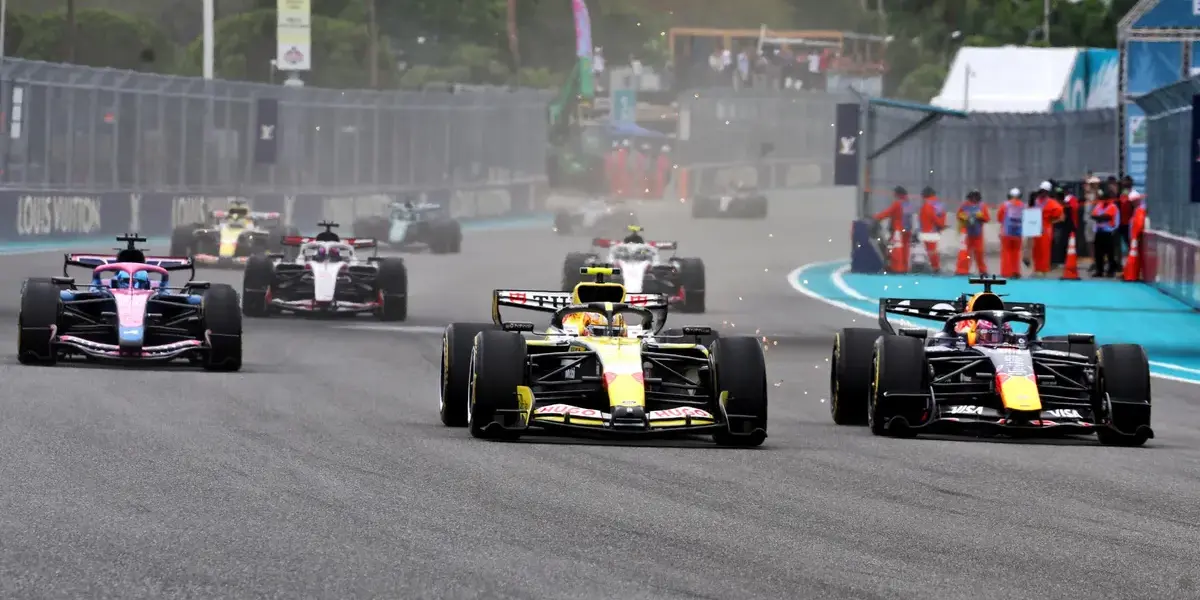

During the Miami Grand Prix on May 3, 2026, Liam Lawson found himself in a tense position when instructed to yield his spot to Max Verstappen. This unexpected order unfolded amid fierce competition and significant pressure in Formula 1.
The drama began early in the race. On Lap 6, Lawson’s race came to an abrupt end due to a gearbox failure that led to a collision with Pierre Gasly at Turn 17. “Drove into the side of me. I don’t understand,” Lawson stated, reflecting on the incident that ultimately forced him to retire.
Before his retirement, Lawson had been racing closely with Verstappen. After starting from the front row, Verstappen lost positions following a spin at Turn 2. As both drivers battled for track position, they veered off track at Turn 11, intensifying the competition.
After being instructed via team radio to give back his position to Verstappen, Lawson expressed his surprise. “I didn’t think I had to give the place back, but apparently I did,” he said. He believed he hadn’t gained an unfair advantage and felt unprepared for such a directive.
Lawson acknowledged that his car struggled with balance throughout the race. “We weren’t quick enough in general. The first couple laps, I already knew we had quite a bad balance,” he admitted. Despite these challenges, he didn’t anticipate being forced into relinquishing his position.
The aftermath of Lawson’s collision with Gasly led officials to review the incident after the race. This added another layer of scrutiny amid ongoing discussions about racing tactics and team strategies in Formula 1.
The events at the Miami Grand Prix illustrate not just individual performances but also how decisions made by teams can significantly impact races and standings in this high-stakes sport. As competitors like Lawson navigate these pressures, their experiences resonate with fans who follow every twist and turn on and off the track.